



Opioid Receptor
Opioid receptors are a group of G protein-coupled receptors with opioids as ligands. The endogenous opioids are dynorphins, enkephalins, endorphins, endomorphins and nociceptin. Opioid receptors are distributed widely in the brain, and are found in the spinal cord and digestive tract. Opioid receptors are molecules, or sites, within the body that are activated by opioid substances. Opioid receptors inhibit the transmission of impulse in excitatory pathways within the human body system. These pathways include the serotonin, catecholamine, and substance P pathways, which are all implicated in pain perception and feelings of well-being. Opioid receptors are further subclassified into mu, delta, and kappa receptors. All the classes, while exhibiting differing modes of action, share some basic similarities. They all are driven by the potassium pump mechanism, which is found on the plasma membrane of the majority of cells.
Opioid Receptor Isoform Specific Products
All Product Categories
-
Opioid Receptor Inhibitors
(23)
View all products
-
Opioid Receptor Agonists
(308)
View all products
-
Opioid Receptor Antagonists
(134)
View all products
-
Opioid Receptor Activators
(29)
View all products
-
Opioid Receptor Modulators
(27)
View all products
-
Opioid Receptor Controls
(7)
View all products
-
Opioid Receptor Ligands
(9)
View all products
-
Opioid Receptor Related Products (621)
Related Products (621)

-
Antibodies (3)
-
Opioid Receptor Isoform Comparison
-
Noscapine hydrochloride
 0 ImagesNoscapine ((S,R)-Noscapine) hydrochloride is an orally active phthalideisoquinoline alkaloid with potent antitussive. Noscapine hydrochloride exerts its antitussive effects by activating sigma opioid receptors and is a non-competitive Bradykinin inhibitor. Noscapine hydrochloride disrupts microtubule dynamics, induces mitotic arrest and apoptosis. Noscapine hydrochloride possesses anticancer, neuroprotective, anti-inflammatory activities, and can crosse the blood-brain barrier.
-
Morphiceptin
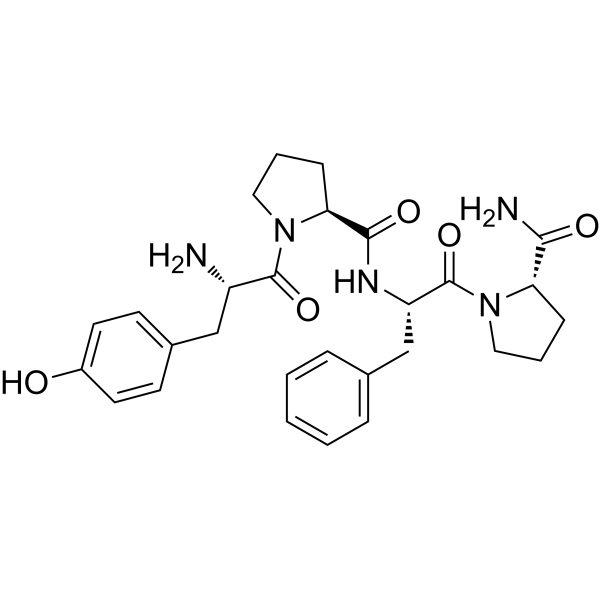 0 ImagesMorphiceptin is a potent and specific agonist for morphine (μ) receptors. Morphiceptin, as a synthetic peptide, is the amide of a fragment of the milk protein β-casein. Morphiceptin has morphinelike activities and is highly specific for morphine (μ) receptors but not for Enkephalin receptors.
-
Samidorphan
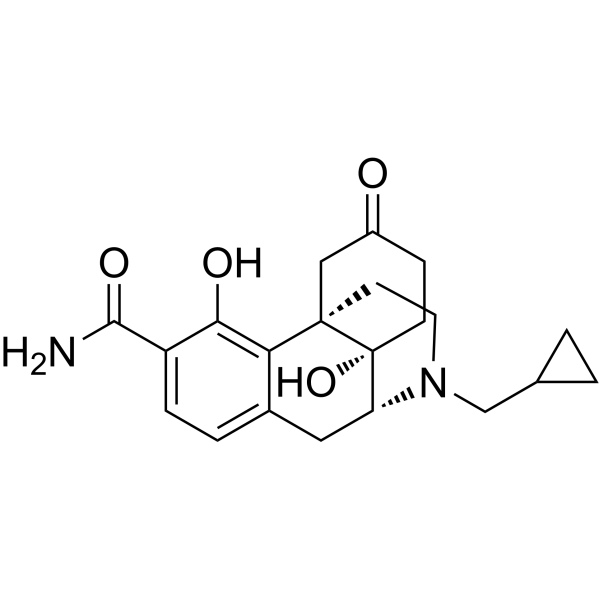 0 ImagesSynonyms: ALKS-33; RDC-0313Samidorphan (ALKS-33) is an orally active opioid system modulator that has a high affinity for binding with μ‐opioid, κ‐opioid, and δ‐opioid receptors. Samidorphan acts as an antagonist at μ‐opioid receptors and acts as a partial agonist at k-opioid and δ‐opioid receptors. Samidorphan primarily acts as an opioid receptor antagonist in vivo. Samidorphan can improve the behavior of depressed animals.
-
Samidorphan
0 ImagesSynonyms: ALKS-33; RDC-0313Samidorphan (ALKS-33) is an orally active opioid system modulator that has a high affinity for binding with μ‐opioid, κ‐opioid, and δ‐opioid receptors. Samidorphan acts as an antagonist at μ‐opioid receptors and acts as a partial agonist at k-opioid and δ‐opioid receptors. Samidorphan primarily acts as an opioid receptor antagonist in vivo. Samidorphan can improve the behavior of depressed animals.
-
Ro 64-6198
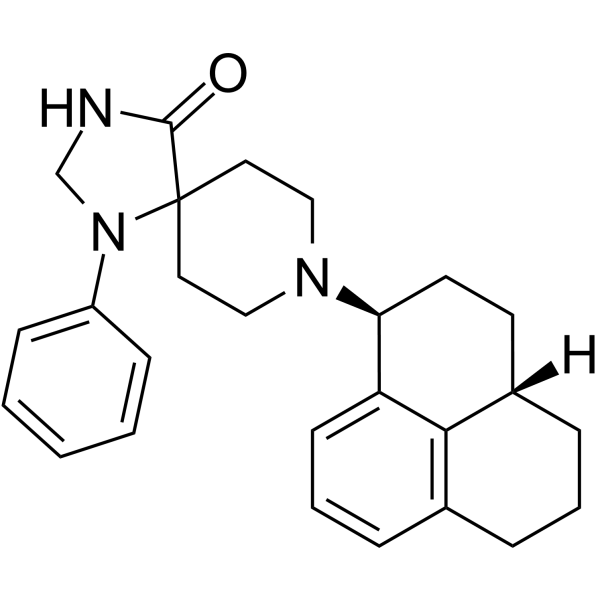 0 ImagesRo 64-6198 is a potent, selective, nonpeptide, high-affinity, high cellular permeability and brain penetration N/OFQ receptor (NOP) agonist with an EC50 value of 25.6 nM. Ro 64-6198 is at least 100 times more selective for the NOP receptor over the classic opioid receptors. Ro 64-6198 can be used for stress and anxiety, addiction, neuropathic pain, cough, and anorexia.
-
CR 665
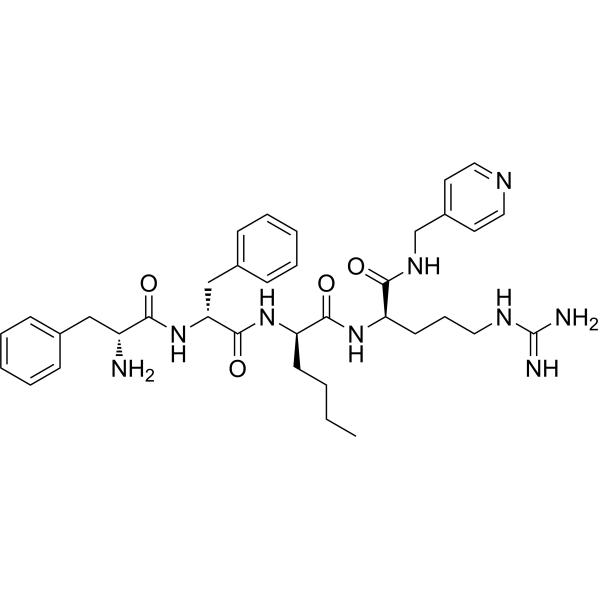 0 ImagesSynonyms: JNJ 38488502; FE 200665CR 665 (JNJ 38488502) is a peripherally selective κ-opioid agonist. CR 665 can activate the kappa opioid receptor with EC50 value of 10.9 nM. CR 665 can be used for the research of peripheral pain.
-
Adrenorphin
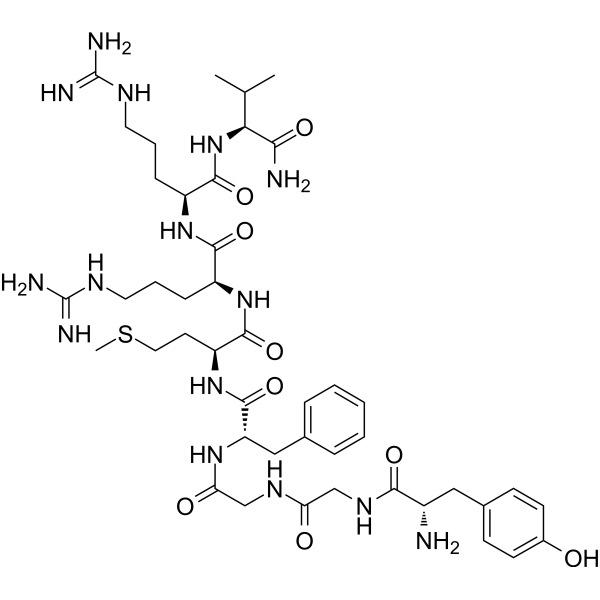 0 ImagesSynonyms: MetorphamideAdrenorphin is a opioid octapeptide, acting as a potent agonist of μ-opioid receptor, with Ki of 12 nM.
-
Tianeptine sodium salt
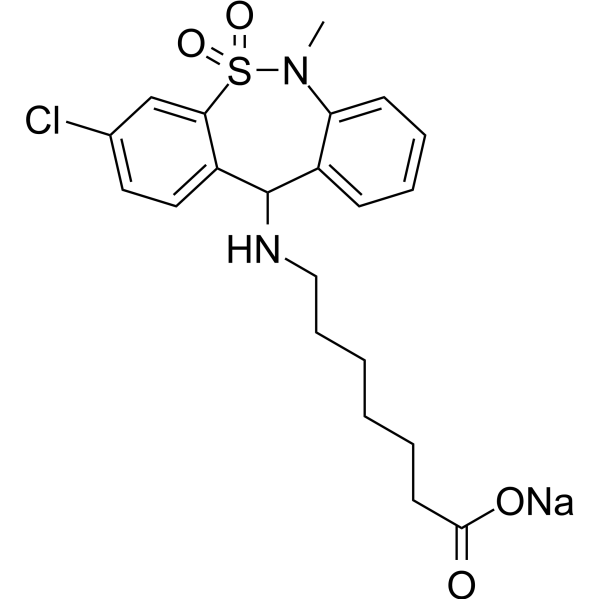 0 ImagesTianeptine sodium salt is an atypical antidepressant. Tianeptine sodium salt is a moderate-intensity agonist of the μ-opioid receptor (MOR), and to a lesser extent, is an agonist of the δ-opioid receptor (DOR). Tianeptine sodium salt is a glutamate modulator that can enhance AMPA receptor and antagonize NMDA receptor. Tianeptine sodium salt increases sensitivity of the α1 adrenergic receptor, which only manifests in chronic treatment. Tianeptine sodium salt exerts neuroprotective effects under stress/inflammation-induced conditions, exhibiting anti-inflammatory and antioxidant properties. Tianeptine sodium salt inhibits MMP-9 by suppressing the PI3K/Akt-mediated NF-κB pathway. Tianeptine sodium salt can be used to alleviate symptoms of depression and anxiety, but does not cause sedative effects.
-
ICI 174864
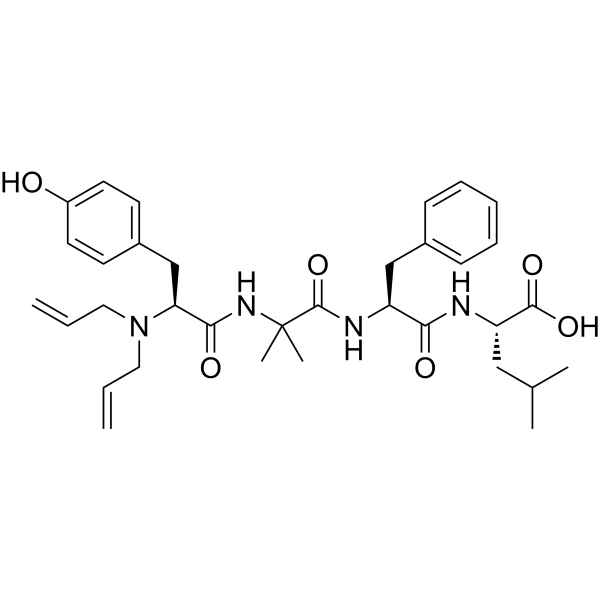 0 ImagesICI 174864 is a selective and brain-penetrant δ-opioid receptor antagonist with Ke values of 22.0 nM to 30.6 nM at δ-opioid receptor in mouse vas deferens. ICI 174864 selectively blocks biological effects mediated by the δ-opioid receptor agonist DPDPE (HY-P1334) after central administration. ICI 174864 reverses hypotension in rats with endotoxic shock and inhibits acetic acid-induced writhing in mice. ICI 174864 can be used for the research of opioid receptor subtypes, endotoxic hypotension and analgesic pathways.
-
Asimadoline hydrochloride
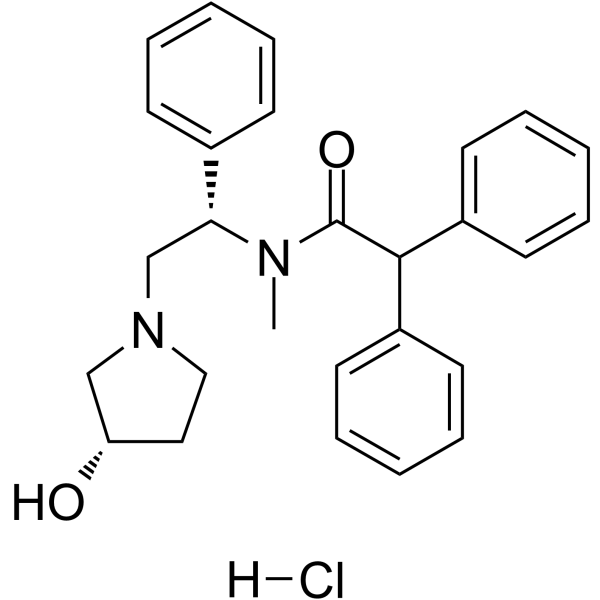 0 ImagesSynonyms: EMD-61753 hydrochlorideAsimadoline (EMD-61753) hydrochloride is an orally active, selective and peripherally active κ-opioid agonist with IC50s of 5.6 nM (guinea pig) and 1.2 nM (human recombinant). Asimadoline hydrochloride has low permeability across the blood brain barrier and has peripheral anti-inflammatory actions. Asimadoline hydrochloride ameliorates allodynia in diabetic rats and has the potential for irritable bowel syndrome (IBS).
-
SCH 221510
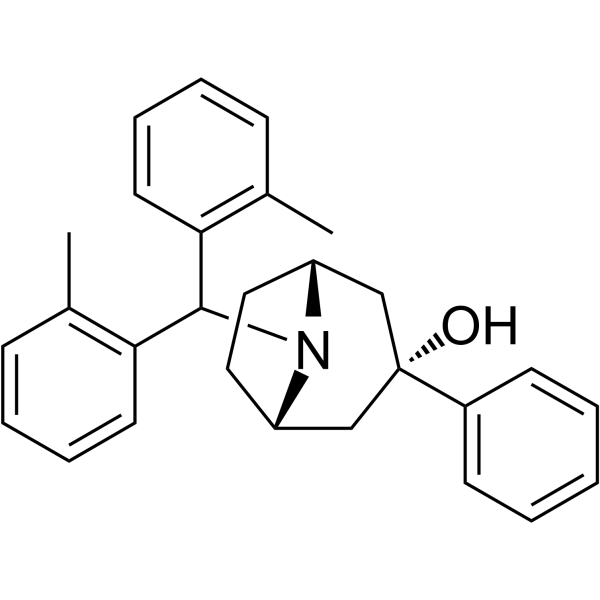 0 ImagesSCH 221510 is a potent, orally active and selective NOP (nociceptin opioid receptor) agonist, with an EC50 of 12 nM and Ki of 0.3 nM. SCH 221510 shows an anxiolytic-like effect.
-
[Leu5]-Enkephalin, amide
![[Leu5]-Enkephalin, amide](https://file.medchemexpress.com/product_pic/hy-p1470.gif "Click to View [Leu5]-Enkephalin, amide Product Detail") 0 ImagesSynonyms: Leu-Enkephalin amide[Leu5]-Enkephalin, amide is a δ opioid receptor agonist.
0 ImagesSynonyms: Leu-Enkephalin amide[Leu5]-Enkephalin, amide is a δ opioid receptor agonist.
-
(+)-N-Allylnormetazocine hydrochloride
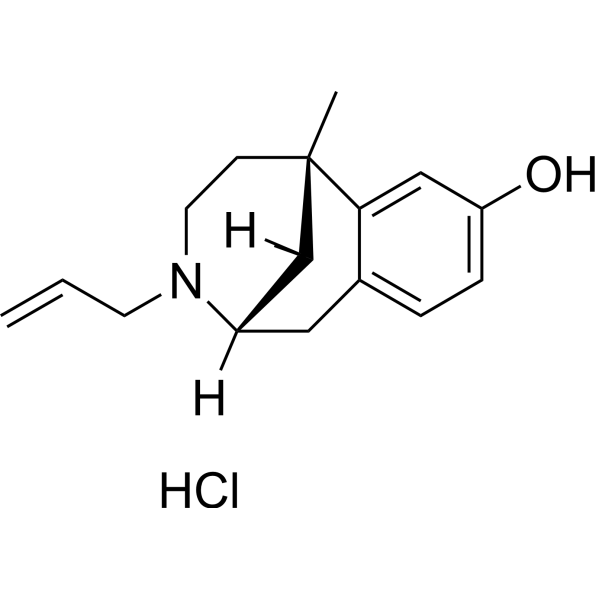 0 ImagesSynonyms: (+)-SKF 10047 hydrochloride; (+)-N-Allyl-N-normetazocine hydrochloride(+)-N-Allylnormetazocine ((+)-SKF 10047) hydrochloride is a benzomorphan opioid with psychotomi metic effects. (+)-N-Allylnormetazocine hydrochloride is an opioid receptor antagonist with Ki values of 300 nM and 27 μM for σ1 and σ2 opioid receptors, respectively. (+)-N-Allylnormetazocine hydrochloride can be used for the research of neurological disease.
-
Anrikefon acetate
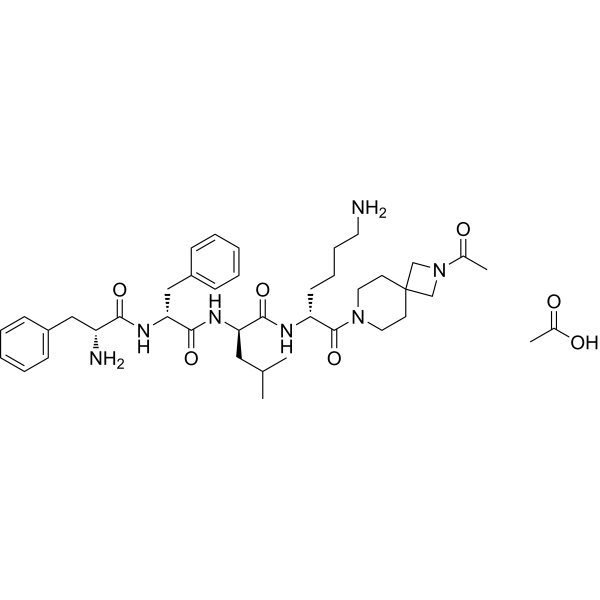 0 ImagesSynonyms: HSK21542 acetateAnrikefon (HSK21542) acetate is a kappa opioid receptor agonist with analgesic effect.
-
Alvimopan dihydrate
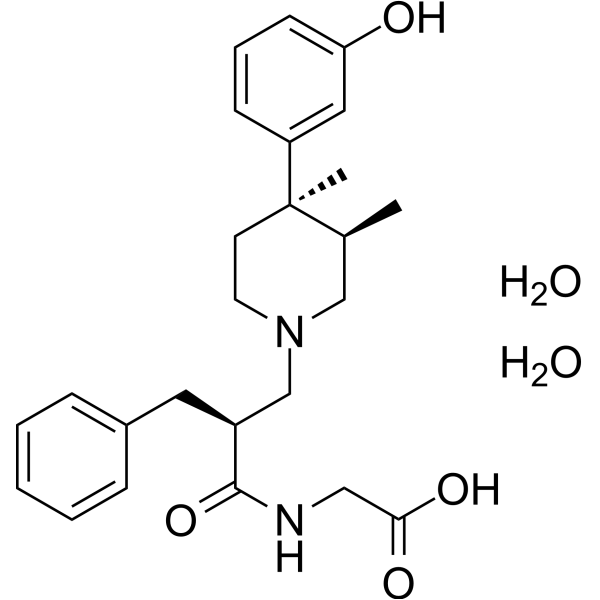 0 ImagesSynonyms: ADL 8-2698 dihydrate; LY 246736 dihydrateAlvimopan dihydrate (ADL 8-2698 dihydrate) is a potent, selective, orally active and reversible μ-opioid receptor antagonist, with an IC50 of 1.7 nM. Alvimopan dihydrate has selectivity for μ-opioid receptor (Ki=0.47 nM) over κ- and δ-opioid receptors (Kis=100, 12 nM, respectively). Alvimopan dihydrate can be used for the research of postoperative ileus.
-
Cychlorphine hydrochloride
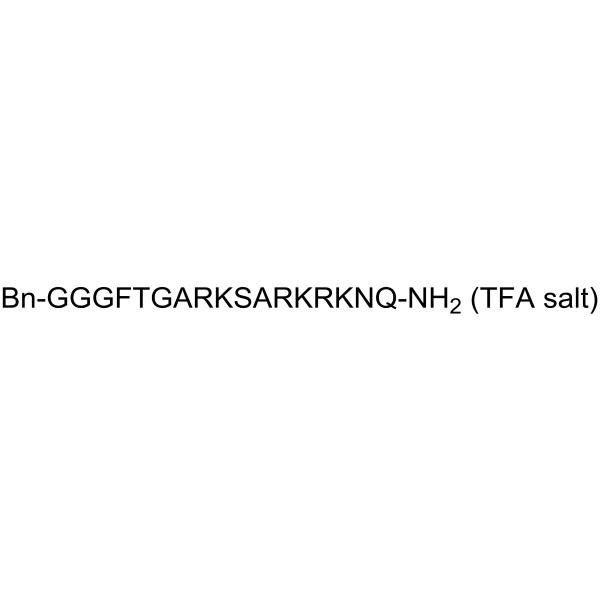
 0 ImagesSynonyms: N-Propionitrile chlorphine hydrochlorideCychlorphine (N-Propionitrile Chlorphine) hydrochloride is a potent μ-opioid receptor (MOP) agonist. Cychlorphine hydrochloride produces analgesic effects. Cychlorphine hydrochloride induces respiratory depression and exhibits complex reversal kinetics with Naloxone (HY-17417A). Cychlorphine hydrochloride can be used for research on opioid overdose.
-
Naloxone hydrochloride (Standard)
 0 ImagesNaloxone (hydrochloride) (Standard) is the analytical standard of Naloxone (hydrochloride) (HY-17417). This product is intended for research and analytical applications. Naloxone hydrochloride is an orally active opioid receptor antagonist. Naloxone hydrochloride attenuates spinal cord stimulation‑associated anti‑hyperalgesic effects, antagonizes physiologic effects of endogenous opioid peptides linked to central nervous system injury sequelae, functions as a pressor agent to induce modest elevations in mean arterial blood pressure, exerts neuroprotective effects to improve post‑traumatic neurologic motor function, blocks opioid receptor‑mediated amnesic pathways, enhances memory consolidation, reverses Adrenocorticotropic hormone (ACTH) (HY-106373)‑ and epinephrine‑induced amnesia, and potentiates the memory‑facilitatory effects of ACTH and epinephrine.
-
Loperamide
 0 ImagesSynonyms: ADL 2-1294Loperamide (ADL 2-1294) is selective and orally active μ opioid receptor agonist with Ki valuess of 3, 48 and 1156 nM against μ, δ and κ opioid receptor, respectively. Loperamide produces antinociception and antihyperalgesia. Loperamide exhibits peripheral selectivity, enhancing fluid, electrolyte, and glucose absorption, reversing PGE2 (HY-101952)- and Cholera toxin (HY-P1446)-induced intestinal secretion, and reducing intestinal motility. Loperamide can be used for the researches of inflammatory pain and protracted diarrhoea.
-
ICI-199441 hydrochloride
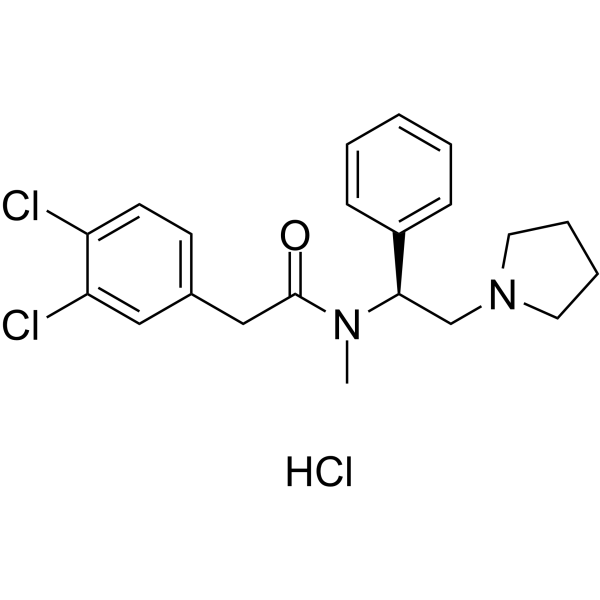 0 ImagesICI-199441 hydrochloride is a potent and selective κ-opioid receptor agonist with analgesic effects. ICI 199441 hydrochloride can improve heart resistance to ischemia/reperfusion.




